Preface
412Toe is a Pittsburgh-based sneaker resale business specializing in highly sought-after footwear. The name merges “412,” Pittsburgh’s area code, with “Toe,” referencing sneaker culture and the front profile of a shoe.
I was responsible for designing the logo and creating a visual identity strong enough to live both digitally and physically on a storefront sign.
This project required balancing cultural relevance with real-world fabrication constraints.
Concept & Identity Strategy
The primary goal was to create a mark that felt:
- Bold and street-driven
- Instantly recognizable
- Scalable for merchandise and signage
- Rooted in Pittsburgh identity
Rather than using literal shoe illustrations, the concept centered around typography as structure.
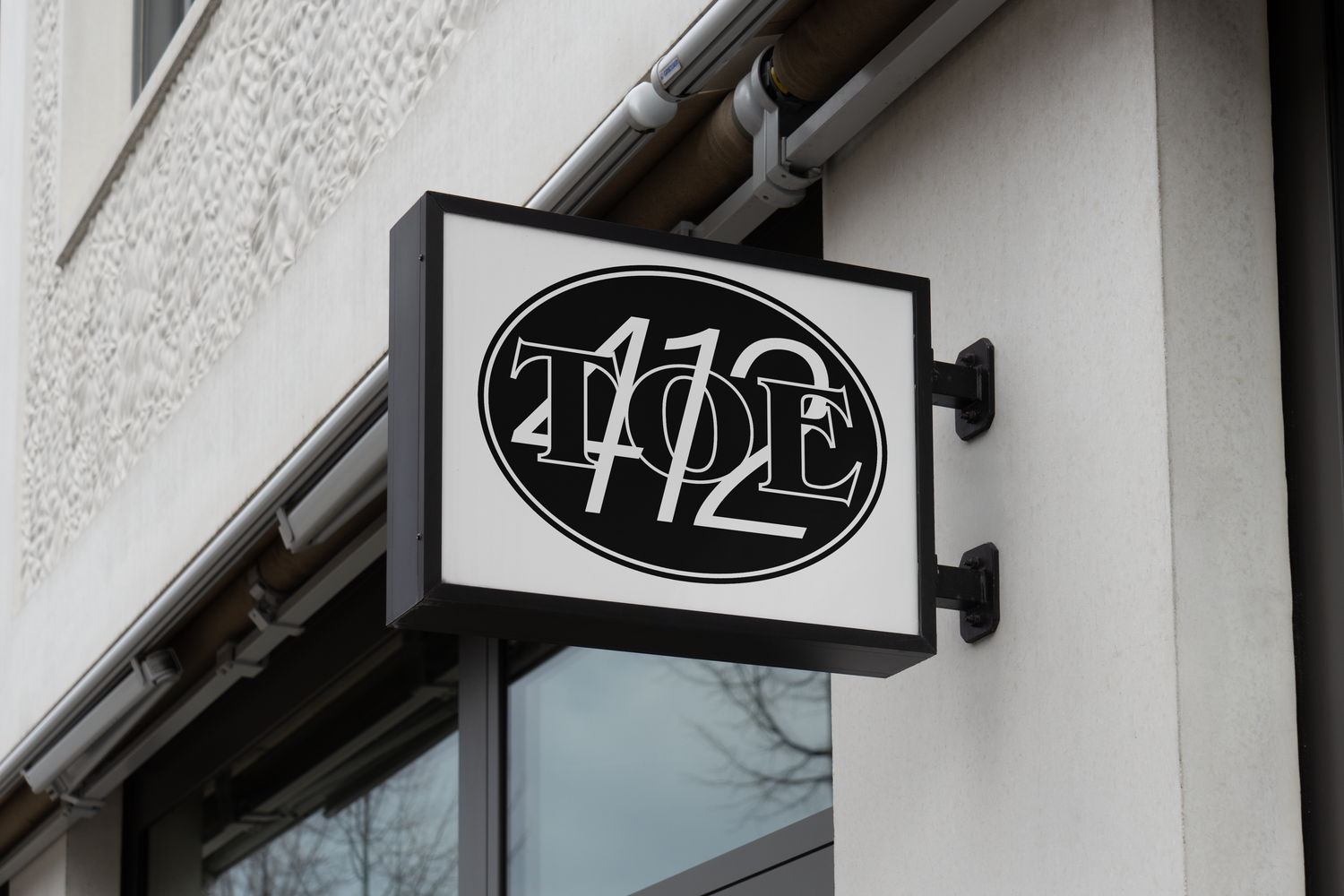
The “412” numerals were layered and intersected with the word “TOE,” creating a stacked, overlapping composition. This intersection subtly mirrors sneaker layering — panels, stitching, overlays — without being overly literal.
The design uses a strong serif typeface to add weight and permanence. This was intentional. Sneaker culture moves fast, but the brand needed to feel established.
Typography & Compositional Decisions
The most distinctive feature is the diagonal “1” slicing through the composition. That diagonal introduces motion, energy, and tension — all qualities associated with streetwear and sneaker drops.
The oval badge version was developed to:
- Increase logo containment
- Improve readability on signage
- Create a cohesive storefront presence
- Enhance balance when fabricated as a dimensional sign
The black-and-white palette reinforces versatility and ensures maximum contrast in both print and physical materials.

From Vector to Physical Signage
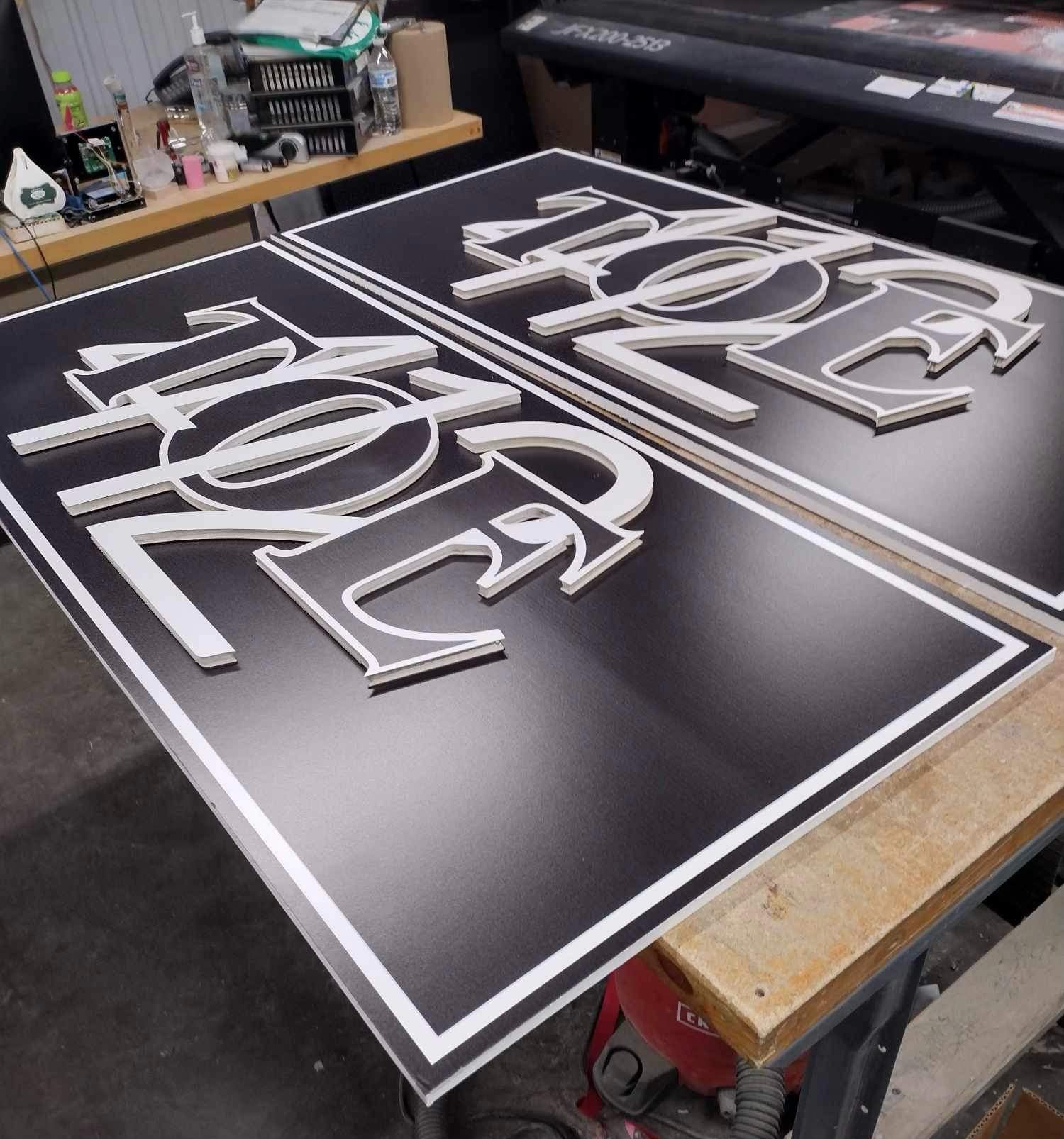
This project extended beyond digital design into real-world production.
The logo was fabricated into a dimensional storefront sign, requiring:
- Vector precision for CNC cutting
- Stroke consistency for routing
- Proper spacing for raised lettering
- Contrast planning for outdoor visibility
Seeing the design mounted on a building transformed it from branding to infrastructure. The logo now functions as a physical landmark within the city.